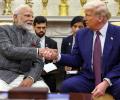
Amidst escalating tensions with Iran, the US has granted India a temporary 30-day waiver to continue purchasing Russian oil, aiming to stabilise global energy markets and encourage future US oil imports by India.
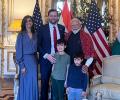
US Vice President JD Vance and his wife Usha, the first Indian-American Second Lady, are set to visit India early next week. Vance will hold talks with Prime Minister Narendra Modi during his visit. The visit comes amid global concerns over President Donald Trump's policy on tariffs. Vance's visit is likely to be more of a private trip though it will have official components.
If pharmaceutical exports from India to the US come under a 25 per cent tariff bracket, the impact on earnings before interest, tax, depreciation and amortisation (Ebitda) could be around 5 per cent, felt analysts. This is after assuming that about 75 per cent of the tariff would be passed on.
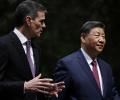
China on Friday raised its additional tariffs on imports from the United States to 125 per cent in retaliation to the Trump administration's 145 per cent levies on Chinese exports.
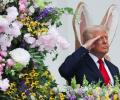
Trump may temper his approach from time to time, but to think that he will change his basic philosophy is delusional, asserts T T Ram Mohan.

Modi also said that President Trump's leadership is vital for global peace, stability, and prosperity.

After the US Supreme Court struck down President Donald Trump's global tariffs, Congress leader Rahul Gandhi accused Prime Minister Narendra Modi of being "compromised", saying his "betrayal" in the India-US interim trade deal stood exposed.

Trump claimed that he "got a call from Prime Minister Modi saying, 'we're done'. I said, 'you're done with what?'" Trump said and claimed Modi replied: "We're not going to go to war."
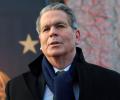
US Treasury Secretary Scott Bessent indicated a potential pathway to remove tariffs imposed on India for purchasing Russian oil, citing a significant decrease in such purchases. He also criticized Europe's approach and accused India of profiting from discounted Russian oil.
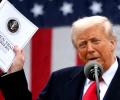
United States President Donald Trump has backed a sanctions bill that could impose 500 per cent tariffs on countries buying Russian oil, giving the White House leverage against countries like China and India to stop them from purchasing cheap oil from Moscow.

US Treasury Secretary Scott Bessent's remarks come ahead of a high-level summit where India and the European Union are expected to formally announce the conclusion of negotiations on a comprehensive free trade agreement.

United States President Donald Trump on Friday withdrew the invitation extended to Canada to join the Board of Peace.
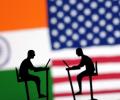
The US said India will lower tariffs on a "vast array" of American industrial and agricultural goods, such as "fruits, vegetables", to zero per cent under the trade deal announced by President Donald Trump.

The US has granted India permission to buy Russian oil already in transit to ease global supply pressures amidst the West Asia conflict. This decision comes after India agreed to halt sanctioned Russian oil purchases and substitute them with US oil.
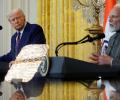
India and the US have entered a new phase in their relationship, marked by greater parity, point out Harsh V Pant and Vivek Mishra.

Spokesperson of the Ministry of Foreign Affairs of China, Lin Jian, said on Wednesday that China supports Iran in maintaining its stability, adding that Beijing has always opposed the interference in other countries' internal affairs and the use of force in international relations.

United States President Donald Trump has brushed aside French President Emmanuel Macron's call for an emergency G7 meeting amid escalating tensions over Washington, DC's push to acquire Greenland, while Europe has warned of retaliatory trade action against US tariff threats.

From the 30-share blue-chip pack, Larsen & Toubro rallied nearly 5 per cent. Adani Ports, IndusInd Bank, Tata Motors, Reliance Industries, UltraTech Cement and Asian Paints were also among the major gainers. ITC Hotels, Zomato, Nestle and Maruti were among the laggards.

Zelenskyy also stated that documents being drafted with Washington, DC to end the war were close to completion.
The Trump administration has told the US Supreme Court that it imposed tariffs against India for purchasing Russian energy products as part of its strategy to address the war in Ukraine.
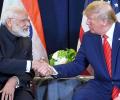
It would be the prime minister's first bilateral visit to the US after Trump became president for a second term.
US President Donald Trump has claimed that India and Pakistan "made peace" in May after he threatened to snap trade deals with them if they continued their military conflict.

'India should understand that we are not going to make the same mistakes with India that we made with China 20 years ago.'
"I am telling you, these countries are calling us up, kissing my a***," Trump said during a speech at the National Republican Congressional Committee dinner on Tuesday.
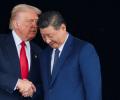
Speaking to reporters aboard Air Force One, Trump stated, "We have a deal," referring to the trade pact which will be routinely extended. "Every year we'll renegotiate the deal, but I think the deal will go on for a long time, long beyond the year. We'll negotiate at the end of the year," he added.
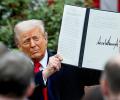
'April 9 announcement of slapping a 125% tariff on Chinese goods has brought the focus back to China, making this new phase feel like a repeat of the original conflict.'

United States President Donald Trump on Tuesday boasted about India-US defence cooperation, claiming that India's order for 68 Apache attack helicopters was delayed by five years and that Prime Minister Narendra Modi personally raised concerns over the long delivery period during a meeting with him.

Trump called for immediate negotiations for the US to acquire Greenland from Denmark, describing the country as ungrateful, during his speech at Davos.
US President Donald Trump warned India about potential tariffs for continuing to purchase oil from Russia, claiming he received assurances from Prime Minister Narendra Modi that India would halt such purchases.

The deal shifts the US posture towards India from hostile to neutral, and that matters for growth, points out T T Ram Mohan.
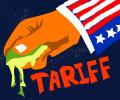
India must focus on building enduring national capabilities and economic sovereignty in the face of shrinking space for rules-based trading, anti-immigrant stance, weaponization of energy sources and growing use of export controls in critical sectors, the Economic Survey said on Thursday.
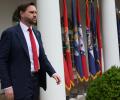
US Vice President J D Vance and National Security Adviser Michael Waltz are scheduled to visit India on April 21, reflecting Washington's focus on strengthening its relationship with India amidst global concerns over President Donald Trump's tariff policy. Vance's visit is likely to be more of a private trip, while Waltz's visit will be a business trip with discussions on security in the Indo-Pacific region, high technology, critical minerals, and export controls. Both are expected to meet Prime Minister Narendra Modi before his trip to Saudi Arabia. The visits come in the wake of Trump's recent pause on tariffs on all countries except China, following widespread economic concerns.

Since May 10, when Trump announced on social media that India and Pakistan had agreed to a "full and immediate" ceasefire after a "long night" of talks mediated by Washington, he has repeated his claim over 70 times that he ended the conflict between India and Pakistan.

Amid the ongoing global tariff war, Commerce and Industry Minister Piyush Goyal on Wednesday asked exporters not to panic and assured them that India is working on the "right mix and right balance" in its proposed trade agreement with the US.

US President Donald Trump has repeated his claim of "stopping" the conflict between India and Pakistan through trade and tariffs, and suggested he deserves the Nobel Peace Prize for settling multiple conflicts.
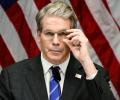
Describing the India-United States relationship as 'very complicated', US Treasury Secretary Scott Bessent on Wednesday hoped that 'at the end of the day, we will come together.'
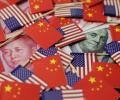
China on Friday said it is assessing whether to start trade talks with the US on tariff reductions following recent approaches by Washington, a move that would possibly ease the tit-for-tit tariff war between the world's two largest economies. "China is making assessments as the United States has recently reached out to convey messages to China through relevant parties many times, expressing hope to engage in talks with Beijing over tariff issues," the Chinese Commerce Ministry said in a statement in Beijing.

Trump's new rules for how countries should treat him have led to the current breakdown in India-US relations, explains Ambassador T P Sreenivasan.
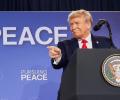
There were apprehensions that additional secondary tariffs would have hit India in case the US decided to enforce them.

US President Donald Trump accused China and India of being the "primary funders" of the Ukraine war by continuing to purchase Russian oil during his address to the UN General Assembly. He also criticized NATO countries for not cutting off Russian energy.
 © 2026 Rediff.com - Advertise with us - Disclaimer - Privacy Policy - Sitemap - Feedback - About us - Terms of use - Grievances